
Moving In
What to buy first when you're furnishing a home together
A realistic order to buy things in, so you're not sleeping on a mattress on the floor for a month while you argue about a coffee table
Moving In
Blending two flats' worth of stuff into one home is a different problem to furnishing from scratch, and it needs a different approach

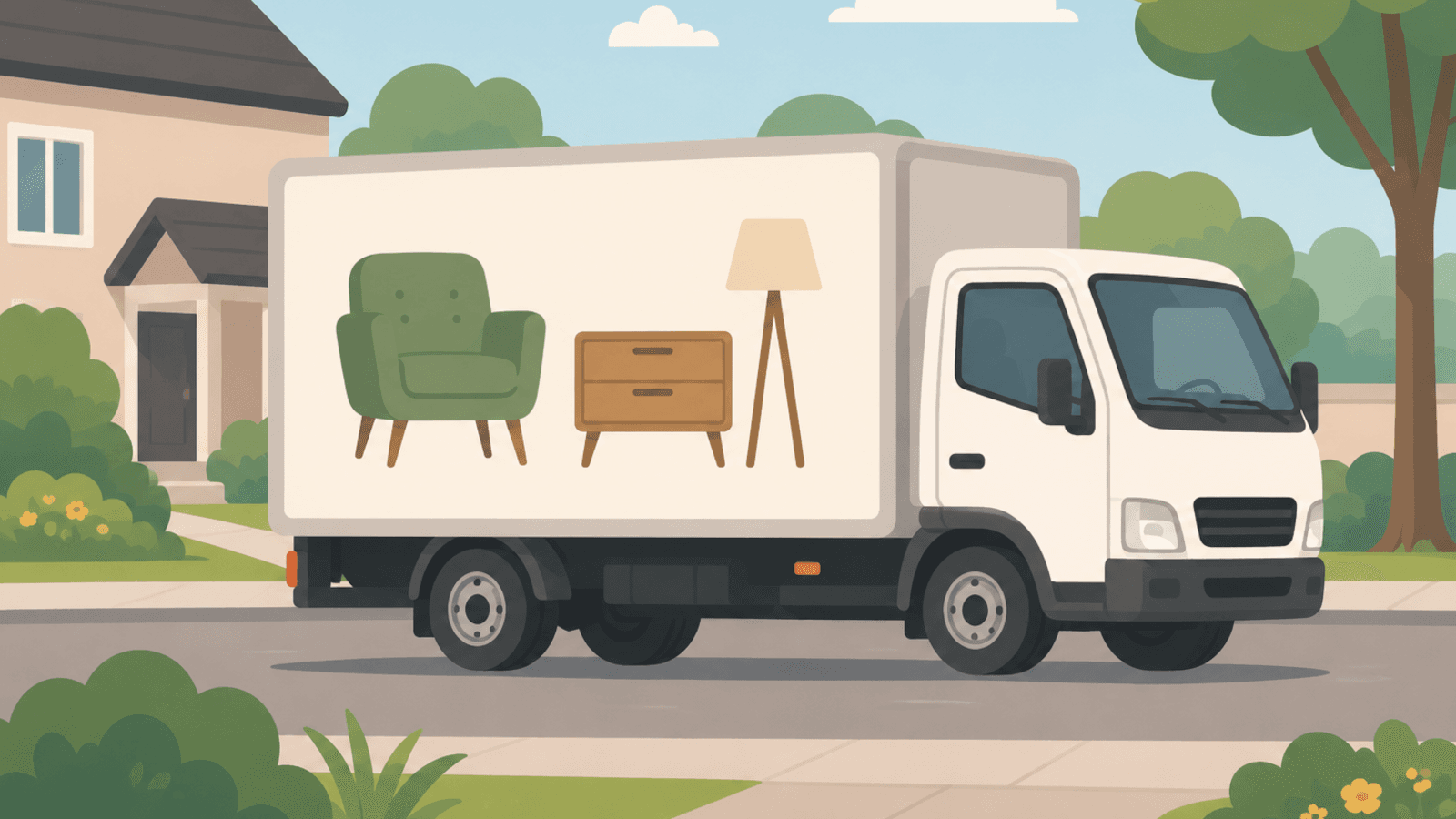
Furnishing from nothing is one problem. Merging two already fully furnished flats into one home is a completely different one, and most furniture advice is written for the first situation, not the second.
The practical challenge is sorting what stays, what goes, and what gets bought new. The harder part is doing that without it quietly turning into a referendum on whose taste, and whose life before this, wins.
The single most useful mental shift is deciding, from day one, that every piece of furniture in the new place belongs to the household, not to whoever brought it. That sounds obvious and isn't, because it's very easy to keep mentally tagging things as “my sofa” or “your bookshelf” for months without noticing you're doing it.
Once something's in the shared home, judge it on whether it's good for the shared home, not on where it came from.
Trying to decide the fate of two flats' worth of furniture in one conversation is exhausting and usually ends with decisions made out of tiredness rather than judgement. Do it room by room instead: living room first, decide sofa, coffee table, storage, then move on. Our room-by-room furniture checklist is a reasonable starting order if you need one.
For genuine duplicates, sofa versus sofa, dining table versus dining table, the question is which one is better for this specific space and this specific budget, not which one of you wins. Condition, size, and how much you'd have to spend to replace it are all fair criteria. Sentimentality about whose it originally was isn't, though it's worth being honest if that's actually what's driving the preference. For the wider question of how to agree on furniture with your partner, including anything new you buy together, we've covered that separately.
“Which one's better” quietly assumes one of the two wins. Sometimes both sofas are genuinely tired, or both dining tables are the wrong size for the new kitchen, and the honest answer is that neither one actually survives the move.
It's worth naming that plainly rather than defaulting to whichever of two mediocre options happens to be in slightly better condition. Keeping a sofa neither of you likes just because it's marginally less worn than the other one isn't really a decision, it's avoiding one.
Furniture that's still in decent condition is usually worth something secondhand. Selling it and splitting the proceeds, rather than one person just absorbing the loss of “their” furniture, makes the whole process feel more like a joint decision and less like one person losing out.
That money is also, conveniently, usually enough to make a dent in whatever you decide to buy new together.
When neither of you wants to make the call on something with sentimental weight, a storage unit can feel like a way of not deciding yet. It rarely is. It's a decision, just a slow and expensive one, dressed up as a postponement.
“Once we have more space” has a way of never quite arriving. If a piece is genuinely worth keeping, it's worth finding room for now. If it isn't, paying monthly to avoid that conversation usually costs more, in money and in how long the question hangs over you both, than just having it.
Almost every couple merging households has one item that causes a disproportionate argument, a chair, a specific table, something that seems minor from the outside. Underneath it is usually a much less minor question: whether your previous life, or your taste, gets any say in the new one.
If a small item is generating a large argument, naming that directly, out loud, usually resolves it faster than debating the item's actual merits ever will.
Two people with fully furnished flats usually have two established styles, and neither of you is wrong. Agree two or three words for where you're heading together before you buy anything new, and judge both the kept furniture and the new purchases against those words rather than against each other's existing taste.
If you truly can't agree which item earns its place, live with your best guess for a month before selling the alternative. Actually using a table every day for a few weeks tells you far more about whether it fits than looking at both options side by side in a hallway ever will.
It also takes the pressure off getting it right immediately. You're not committing forever the moment the van leaves, you're making a reasonable call you can still revisit once you've actually lived with it.
With this much furniture in play at once, from two different starting points, it's extremely easy to lose track of what's actually been agreed versus what's still being discussed. Somewhere you can both see the current state of every room, what's staying, what's going, and what you're planning to buy, saves a lot of “wait, I thought we'd decided that” moments.
It's also how you actually avoid buying duplicate furniture when merging two households, which is the other failure mode of doing this without a shared list: one of you orders a coffee table on a Tuesday lunch break without knowing the other already has one in a van somewhere. Furnish Together, a furniture wishlist app for couples, works well here: mark what's staying as Delivered so it reads as settled rather than still up for debate, mark anything newly bought as Ordered the moment it's purchased so the other person sees it's handled before they go looking themselves, and vote on anything you're still merging opinions on. The whole household's status is visible to both of you at a glance, which is the actual mechanism, not just a nice-to-have.
Merging two homes is never going to be easy. Handled this way, though, it's a lot less likely to turn into a string of small arguments that are secretly about something bigger.
Whichever piece is genuinely better for the space and the two of you, decided item by item rather than by whose flat it came from.
Treating it as one household's furniture from day one avoids a lot of quiet resentment.
Keep one shared, visible list of what's staying, what's still needed, and what's already been bought, rather than each of you shopping from memory.
Marking an item Ordered the moment it's bought, and Delivered once it's settled into the home, is what actually stops it happening. Without that, the usual way it goes wrong is one of you ordering something the other has already sorted, and finding out when two boxes turn up the same week.
Sell what's worth selling and split the money, since it usually funds part of what you buy new together. Give away or recycle the rest rather than storing it indefinitely 'just in case'.
Very. It's rarely really about the furniture, it's about feeling like your taste, or the life you had before this, doesn't get a vote.
Naming that directly usually resolves it faster than arguing about the item itself.
Pick a small number of shared style words first, then judge each existing piece and each new purchase against those words rather than against 'whose style is this'. It turns a taste argument into a much simpler fit-or-doesn't question.
Rarely worth it financially or environmentally. A genuine fresh start on one or two big pieces you'll use daily, kept alongside sensible existing furniture elsewhere, usually gets you most of the benefit for a fraction of the cost.
Say so plainly rather than keeping whichever one is in marginally better condition. Sell both and put the money towards something new that actually suits the space, rather than defaulting to the less-worn of two options neither of you likes.
Usually not. Storage feels like avoiding a decision but it's really just a slow, expensive version of one. If a piece is worth keeping, find room for it now; if it isn't, paying monthly to defer that conversation rarely pays off.
Settle what stays and what goes, together.
A realistic order to buy things in, so you're not sleeping on a mattress on the floor for a month while you argue about a coffee table

Everything you actually need before the van arrives, room by room, including the bits nobody mentions until you're standing in an empty flat wondering where the bin goes

Six free wishlist tools people actually use, what each one gets right, and where it falls short if you're furnishing a home together